Working with fibreglass resin can be incredibly rewarding when done correctly, producing strong, durable and professional results across a wide range of applications. However, one of the most common causes of failure in fibreglass projects is incorrect resin to catalyst ratios. Even small miscalculations can lead to poor curing, wasted materials and compromised structural integrity.
Accuracy is not just a recommendation, it is essential. Whether you are laminating, repairing or moulding, getting the mix right ensures optimal performance of your materials and reduces unnecessary expense. Resin systems are designed to work within precise parameters, and deviating from them can quickly lead to frustration.
Measuring resins and catalysts properly will give you the benefit of consistent curing times, improved finish quality and stronger final products. It also helps you plan projects more effectively, avoiding delays caused by under or over catalysed batches. In a professional or commercial setting, this level of control is critical for maintaining standards and customer satisfaction.
Failing to follow correct measurement practices can result in resin that remains tacky, overheats or becomes brittle. These issues not only waste materials but can also damage moulds and tools. In this guide, Fibreglass Supplies will walk you through the correct methods, tools and best practices to help avoid costly mistakes and achieve reliable and desirable results every time.
The ratio between resin and catalyst, typically MEKP for polyester resins, directly affects the curing process. Too little catalyst will slow or even prevent curing, while too much can cause excessive heat, cracking or discolouration. Most resins used in the fibreglass industry require between 1 and 2 percent catalyst by volume, but this can vary depending on temperature and manufacturer guidance.
Environmental conditions play a significant role in determining the correct ratio. In colder conditions, slightly higher catalyst levels may be required to maintain curing speed, whereas in warmer environments, less catalyst is needed to prevent rapid curing. Always refer to product data sheets supplied by Fibreglass Supplies for precise recommendations.
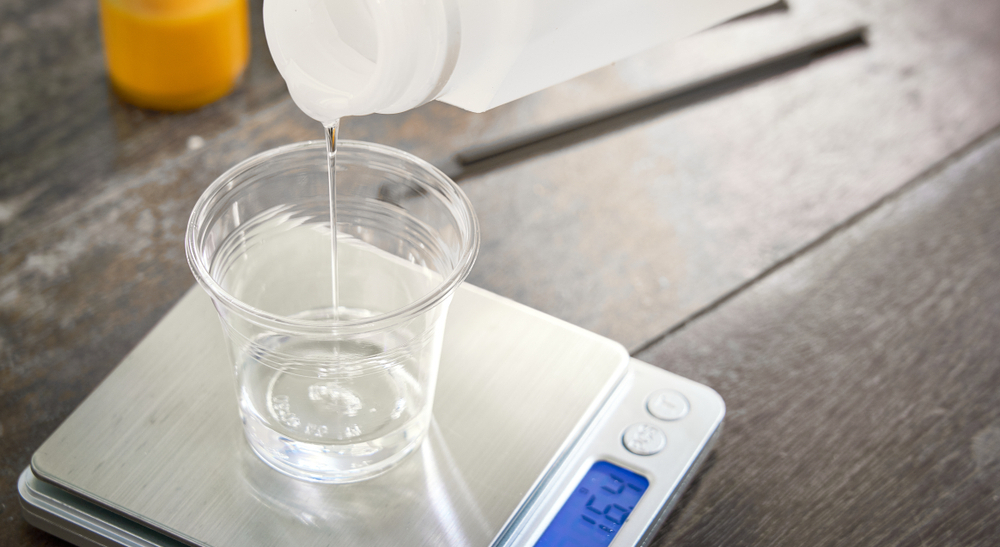
Using the correct measuring tools is essential for achieving consistent results. Graduated mixing cups, syringes and digital scales all provide reliable ways to measure resin and catalyst accurately. Avoid estimating by eye, as even minor inaccuracies can lead to significant issues during curing.
Digital scales are particularly useful for larger batches, allowing precise weight-based measurements. For smaller quantities, calibrated cups or droppers provide better control. Investing in proper tools from trusted suppliers like Fibreglass Supplies will save both time and money in the long run.
Measuring resin and catalyst does not need to be complicated, but it does need to be precise. The key is to break the process down into simple, repeatable steps. Once you understand the basics, it becomes second nature and greatly reduces the risk of errors. Taking a few extra moments to measure properly will save you time, money and frustration later on.
Start by working out how much resin you actually need for the job. It is always better to mix smaller amounts more frequently than to risk wasting a large batch. Next, calculate the correct amount of catalyst based on the recommended percentage, which is usually between 1 percent and 2 percent. Then carefully add the catalyst to the resin and mix thoroughly until the consistency is completely uniform.
One of the most frequent errors is adding too much catalyst in an attempt to speed up curing. This often results in overheating, shrinkage and weakened laminates. Another common issue is insufficient mixing, which can leave soft or uncured patches in the finished product.
Temperature misjudgement is also a major factor. Many users fail to adjust catalyst levels based on working conditions, leading to inconsistent results. Being aware of these pitfalls and taking preventative steps can significantly improve outcomes.
Consistency is achieved through preparation, accurate measurement and disciplined working methods. Always plan your batches in advance and avoid mixing more resin than you can use within the pot life. Smaller, controlled batches are easier to manage and reduce waste.
Keeping a record of your mixes can also be beneficial, especially for repeat projects. Noting temperature, ratios and results allows you to refine your process over time. Customers working on larger or ongoing projects will find this particularly useful.
Measuring resin and catalyst properly is a fundamental skill for anyone working with fibreglass. It directly impacts the quality, strength and reliability of your finished work. By using accurate tools, following manufacturer guidelines and adapting to environmental conditions, you can avoid costly mistakes and achieve professional results.
Adopting these best practices will not only improve project outcomes but also maximise the value of your materials. Precision and consistency are the foundations of successful fibreglass work, and mastering them will set you apart.