
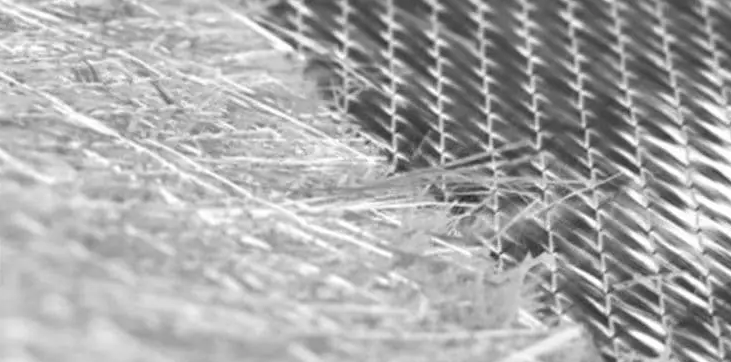
Choosing between chopped strand matting and woven fibreglass cloth can make a significant difference to the strength, finish and durability of a composite project. Although both products use glass fibre reinforcement, their construction and performance are quite different.
Understanding these vital differences will help you select a material that suits your resin system, application method and finished component.
Chopped strand mat is widely used for mouldings, boat repairs, vehicle panels, roofing details, ponds, tanks and general fibreglass fabrication. Woven fibreglass cloth is commonly chosen for structural repairs, marine laminates, canoes, kayaks, model making, automotive components and projects where a lighter, stronger or neater laminate is required. In some applications, the two reinforcements are combined to provide bulk, surface conformity and directional strength.
The correct material can make laminating faster, reduce wasted resin and produce a stronger component with fewer defects. It can also improve handling around curves, help control finished weight and reduce the amount of sanding or fairing required. For online customers, comparing fabric weight, weave, roll dimensions and resin compatibility before ordering is far more useful than choosing on price alone.
Selecting the wrong reinforcement materials can result in trapped air, poor wet-out, excessive resin consumption or a laminate that is weaker than expected. Using chopped strand mat with an unsuitable resin may prevent its binder from breaking down properly, while laying woven cloth in the wrong orientation can waste much of its structural potential. In this guide, Fibreglass Supplies explains the practical differences so that you can order the right fibreglass reinforcement with confidence...
Chopped strand mat, often abbreviated to CSM, is a non-woven reinforcement material that's made from short strands of glass fibre, distributed in a largely random web-like pattern, and held together with a binder. Once the correct resin is applied, the mat softens and can be consolidated with a laminating roller to form a solid glass reinforced plastic laminate. Its chaotic fibre arrangement provides relatively even reinforcement in different directions across the laminate, although it is generally less efficient structurally than a fabric containing continuous fibres. CSM is especially useful when building thickness, covering broad areas or working over moderately complex shapes.
Woven fibreglass cloth is a type of glass fibre fabric produced from continuous glass fibre yarns interlaced in warp and weft directions. This organised grid-like construction places a high proportion of the fibres along two defined axes, allowing the cloth to carry loads efficiently when it is orientated correctly. Plain weave cloth is stable and easy to handle, while twill and other weave styles may drape more readily around compound curves. Woven cloth can create a lighter, stronger and more refined laminate than chopped strand mat, but its directional structure requires more careful cutting and positioning.
The principal performance difference between chopped strand mat and woven fibreglass cloth lies in fibre length and orientation.
Continuous fibres in woven cloth can transfer loads effectively along the warp and weft, so a well-designed cloth laminate normally offers a better strength-to-weight ratio than a comparable CSM laminate. Chopped strand mat requires more resin and is useful for producing thickness, general stiffness and a reasonably uniform response in the plane of the laminate.
Neither material is automatically better in every situation because laminate performance also depends on fibre weight, resin content, layer orientation, consolidation, cure and component design.
Resin compatibility is one of the most important checks to make before buying fibreglass reinforcement online. Many conventional chopped strand mats use a binder designed to dissolve in the styrene contained in polyester resin or vinylester resin, which allows the strands to separate and conform during laminating. Epoxy does not contain styrene, so standard emulsion-bound mat may remain stiff, wet out poorly or fail to consolidate correctly when used with epoxy. Woven fibreglass cloth is commonly used with epoxy, polyester and vinyl ester systems, although the product’s fibre sizing and technical data should still be checked.
Chopped strand mat conforms well once its compatible binder begins to break down, making it useful for mouldings, corners and irregular repair areas. It also helps reduce weave print when placed appropriately within a polyester or vinyl ester laminate, although a suitable surface layer or finishing system may still be required. Woven cloth produces a more orderly surface and is available in lighter grades that can become almost transparent under resin, but heavier or tighter weaves may bridge sharp corners.
Complex components often benefit from smaller tailored pieces, overlapping layers or a more drapable weave rather than forcing one large sheet into place.
Chopped strand mat is usually the practical choice for general polyester or vinyl ester laminating, rapid thickness build and mouldings with varied contours. Woven fibreglass cloth is normally preferred when strength, controlled fibre direction, low weight or compatibility with an epoxy laminating system is required. A hybrid laminate can offer useful benefits by combining the conformability and bulk of CSM with the structural efficiency of woven reinforcement.
For safety-critical, heavily loaded or regulated components, the laminate schedule should always be confirmed by the original manufacturer, a qualified composite engineer or an experienced technical supplier.
There is no universal winner in the chopped strand mat versus woven fibreglass cloth comparison. The best option is the reinforcement that matches the resin, manufacturing process, shape and mechanical demands of the project. Check the technical information before purchase, prepare every layer in advance and follow the resin manufacturer’s instructions for mixing, application, curing and personal protective equipment. Making those decisions carefully will produce a cleaner, stronger and more dependable fibreglass laminate.
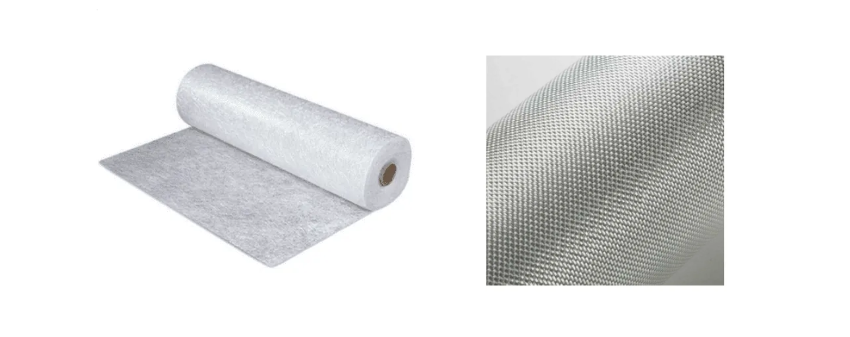
Our selection includes lightweight plain weave and twill weave fibreglass cloth for smooth, conformable laminates, alongside heavier woven rovings and chopped strand matting for projects requiring greater thickness and structural reinforcement. Our glass fibre fabrics are available in a choice of weights and sizes. They're suitable for use with compatible polyester, vinylester and epoxy resin systems, making it easier to select the right reinforcement for your application.
Browse our fibreglass matting and woven glass cloth today to find dependable materials for strong, consistent and long-lasting composite results.


